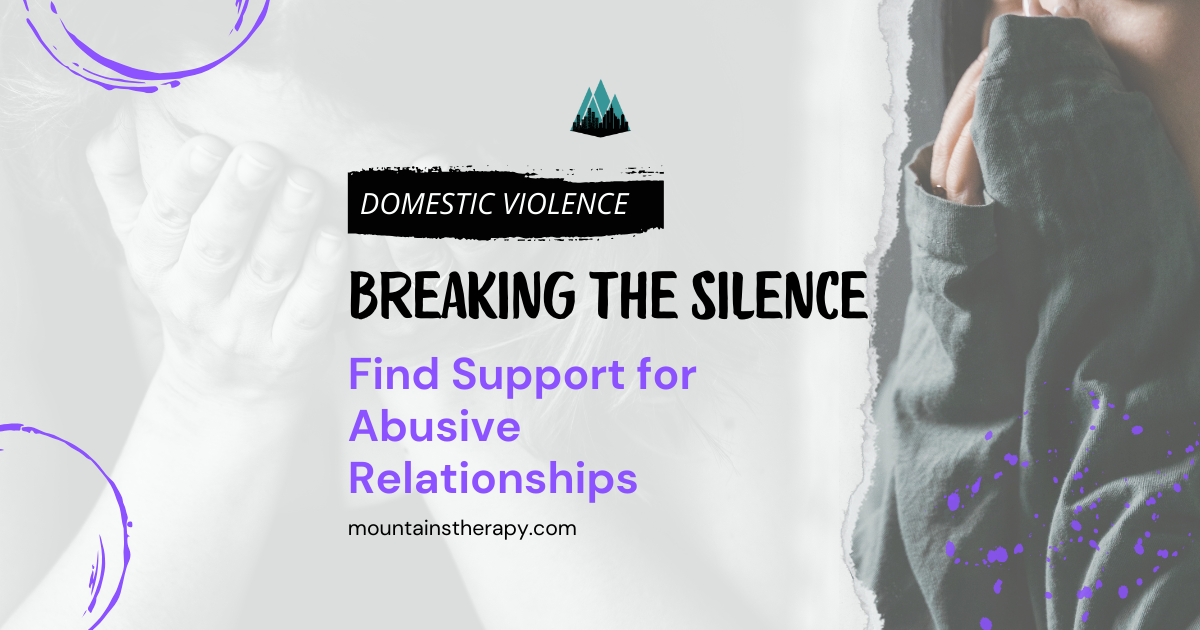
breaking the silence of domestic violence: find support for abusive RELATIONSHIPS
Learn more about Individual Therapy for Abusive Relationships.
October is not just about fall foliage and pumpkin spice lattes; it's also a month dedicated to raising awareness about an issue that often remains shrouded in silence—domestic violence, also known as intimate partner violence or abusive relationships. In this blog post, we will delve into the gravity of this problem, its impact on individuals and society, and ways we can collectively work towards eradicating it.
Understanding Domestic Violence, Intimate Partner Violence, and Abusive Relationships
Domestic violence, also referred to as intimate partner violence and abusive relationships, is a complex and pervasive issue that affects millions of people worldwide. It encompasses various forms of abuse, including physical, emotional, psychological, and economic abuse. At its core, these dynamics revolve around power and control, with abusive partners exerting dominance over their survivors, resulting in both physical and emotional harm.
The Survivors (formerly known as the Victims)
Domestic violence, intimate partner violence, and abusive relationships do not discriminate. They can happen to anyone regardless of age, gender, socioeconomic status, or cultural background. Survivors often endure prolonged suffering in silence due to fear, shame, or a lack of resources to escape their situations. Seeking support from an individual therapist or engaging in individual therapy can be a crucial first step toward healing and reclaiming independence from an abusive partner.
The Impact of Abusive Partners and Relationships
The consequences of domestic violence, intimate partner violence, and abusive relationships are far-reaching. Survivors can experience physical injuries, trauma, and long-term emotional scars. Children growing up in households with an abusive partner may carry these traumas into adulthood, perpetuating a cycle of abuse. Society as a whole suffers, as these forms of violence place an immense burden on healthcare systems, legal systems, and social services. Working with an emotional abuse therapist, psychological abuse therapist, or physical abuse therapist can help survivors process these traumas and find ways to move forward.
The Impact of Abusive Partners and Relationships
The consequences of domestic violence, intimate partner violence, and abusive relationships are far-reaching. Survivors can experience physical injuries, trauma, and long-term emotional scars. The psychological effects often include post-traumatic stress disorder (PTSD) or complex PTSD, which can manifest as flashbacks, hypervigilance, emotional numbness, and difficulty trusting others. For some survivors, the chronic exposure to abuse leads to complex PTSD, which involves more pervasive emotional and relational challenges stemming from prolonged trauma.
Children growing up in households with an abusive partner may carry these traumas into adulthood, perpetuating a cycle of abuse. They are at increased risk of developing PTSD, anxiety, depression, or other mental health concerns that can affect their relationships and quality of life.
The Impact of Abusive Partners and Relationships
The consequences of domestic violence, intimate partner violence, and abusive relationships are far-reaching. Survivors can experience physical injuries, trauma, and long-term emotional scars. The psychological effects often include post-traumatic stress disorder (PTSD) or complex PTSD, which can manifest as flashbacks, hypervigilance, emotional numbness, and difficulty trusting others. For some survivors, the chronic exposure to abuse leads to complex PTSD, which involves more pervasive emotional and relational challenges stemming from prolonged trauma.
Children growing up in households with an abusive partner may carry these traumas into adulthood, perpetuating a cycle of abuse. They are at increased risk of developing PTSD, anxiety, depression, or other mental health concerns that can affect their relationships and quality of life.
Society as a whole suffers, as these forms of violence place an immense burden on healthcare systems, legal systems, and social services. Working with an emotional abuse therapist, psychological abuse therapist, or physical abuse therapist can help survivors process their trauma, address the symptoms of PTSD and complex PTSD, and develop tools for reclaiming their emotional well-being. Therapy offers survivors a path to not only recover but also rebuild their lives with strength and resilience.
Raising Awareness About Domestic Violence and Intimate Partner Violence
To combat domestic violence, intimate partner violence, and abusive relationships, awareness is key. This October, let's all take steps to spread the word:
- Education: Learn about the signs and forms of domestic violence, intimate partner violence, and abusive relationships. Familiarize yourself with local and national resources available to survivors and survivors.
- Support: Reach out to organizations and shelters that assist survivors. Offer a helping hand or donate to their cause.
- Speak Up: Don't be a bystander. If you suspect someone is in an abusive relationship or experiencing domestic violence, express your concern and provide resources.
- Advocate: Support legislation and policies that protect survivors and hold abusive partners accountable.
- Empower: Encourage survivors to seek help and empower them to make choices that lead to safety and healing.
Therapy as a Path to Healing
Therapy can play a critical role in helping survivors of domestic violence, intimate partner violence, and abusive relationships heal and regain their sense of self. A skilled individual counselor or domestic abuse therapist can guide survivors through processing trauma, managing emotional responses, and building resilience. For those who have experienced abusive relationships or endured the control of an abusive partner, therapy offers a safe space to rebuild trust, confidence, and a sense of security.
National and State-Based Resources for Domestic Violence and Intimate Partner Violence
Here are some resources and organizations that can help individuals impacted by domestic violence, intimate partner violence, or abusive relationships:
- National Domestic Violence Hotline
- Website: www.thehotline.org
- Phone: 1-800-799-SAFE (1-800-799-7233)
- RAINN (Rape, Abuse & Incest National Network)
- Website: www.rainn.org
- Phone: 1-800-656-HOPE (1-800-656-4673)
- Domestic Violence Awareness Project
- Website: www.dvawareness.org
- Futures Without Violence
- Website: www.futureswithoutviolence.org
- National Coalition Against Domestic Violence (NCADV)
- Website: www.ncadv.org
Local Crisis Lines and Services for NJ, NC, FL, and UT
New Jersey (NJ)
- New Jersey Domestic Violence Hotline - 1 (800) 572-SAFE (7233)
- Provides confidential access to domestic violence and intimate partner violence information and services.
- New Jersey Coalition Against Sexual Assault (NJCASA) Hotline - 1 (800) 601-7200
- Women’s Referral Central Hotline - 1 (800) 322-8092
- The Women's Referral Central Hotline provides comprehensive information, referrals, active listening, and crisis response for issues confronting New Jersey residents, including but not limited to:
Child Care
Discrimination
Displaced Homemaker
Divorce
Employment
Housing
Job Training
Legal Assistance
Single Parenting
Social Services
North Carolina (NC)
- North Carolina Coalition Against Domestic Violence (NCCADV)
- Visit NCCADV.org
Florida (FL)
- Abuse Hotline: 1-800-962-2873
- Domestic Violence Hotline: 1-800-500-1119
Utah (UT)
- Utah Domestic Violence Coalition - 1-800-897-5465
Breaking the Cycle of Domestic Violence and Intimate Partner Violence
Domestic violence, intimate partner violence, and abusive relationships are global issues that demand our attention every day. Therapy can provide survivors with the tools to heal and reclaim their lives. If you or someone you know is struggling, reaching out to a trusted individual counselor, domestic abuse therapist, or emotional abuse therapist in Montclair, NJ, or your local area, can make all the difference.
By breaking the silence and working together, we can create a safer world where everyone has the opportunity to thrive. Including these resources in your awareness efforts will not only help individuals in need but also educate the public on where they can turn for support and assistance.
Contact us to connect with Therapists for Abusive Relationships and Counselors for Abusive Relationships.
POSTS
Elevate Mental Health Blog: Best Therapists of Montclair 2024