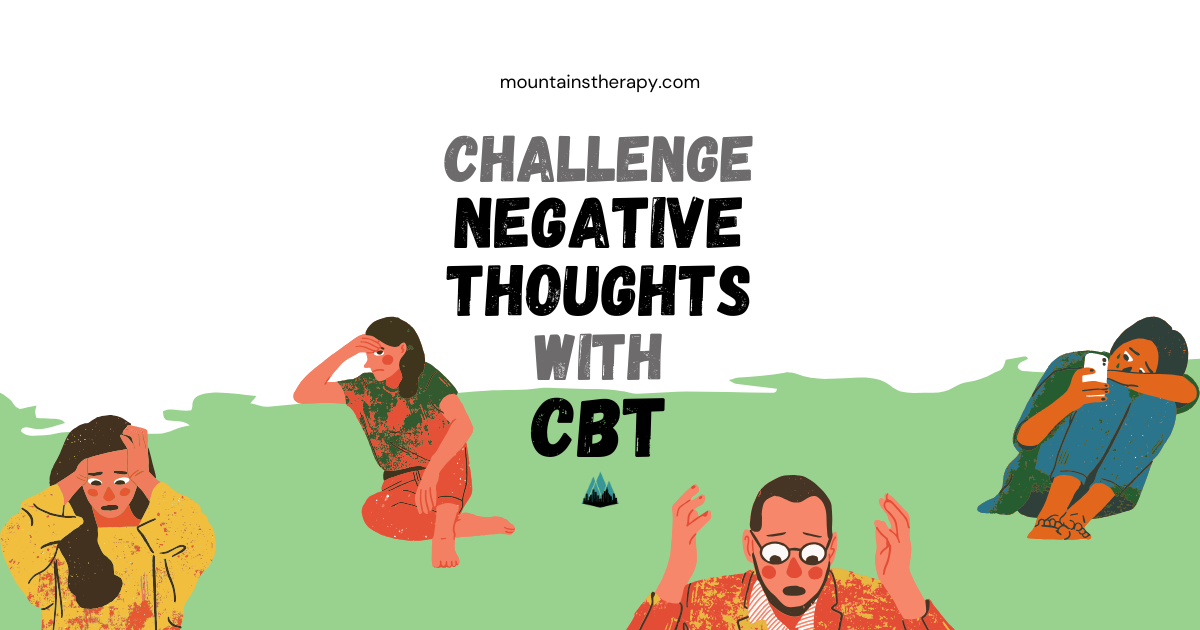
Negative Thoughts: How Cognitive Behavioral Therapy Can Help
Learn more about Individual CBT Therapy.
In This Blog, You’ll Learn:
- How negative thoughts affect your mental health
- Real-life examples of negative thoughts
- How Cognitive Behavioral Therapy (CBT) helps challenge and change thought patterns
- Techniques to shift from negative thoughts to positive thoughts
- When to seek help from a CBT therapist
Do you ever find yourself caught in a cycle of negative thoughts? You're not alone. Negative automatic thoughts can take a toll on our mental well-being and hinder our ability to live a fulfilling life. That's where Cognitive Behavioral Therapy (CBT) comes in. At Mountains Therapy in NJ, CBT therapy is a therapeutic approach that focuses on challenging and changing these negative thoughts to improve our emotional state and overall outlook.
The Role of Negative Thoughts in CBT
Negative thoughts can lead to anxiety, depression, and self-doubt. They are the automatic, intrusive thoughts that reinforce negative emotions and behaviors. These thoughts often feel true, even when they are not based on reality. For example, someone struggling with negative thoughts with anxiety might think, "I'm going to fail at everything." Similarly, a person with negative thoughts with depression may believe, "Nobody cares about me."
In CBT therapy, a cognitive behavioral therapist works with individuals to identify, challenge, and replace these thoughts with healthier perspectives using CBT treatment interventions. This approach is backed by research and is highly effective in treating negative thoughts with ADHD, anxiety, and depression. Below, you'll find real-life interventions for cognitive behavioral therapy to challenge negative thoughts.
Real-Life Examples of Negative Thoughts
Common Thought Distortions: These cognitive distortions make negative thoughts feel more real than they actually are:
Common Cognitive Distortions:
- All-or-Nothing Thinking: Viewing situations in extremes.
- Example: "If I don’t succeed completely, I’m a failure."
- Overgeneralization: Assuming a single event applies to everything.
- Example: "I got rejected once, so no one will ever love me."
- Mental Filtering: Focusing only on the negative aspects of a situation while ignoring the positives.
- Example: "I got one piece of negative feedback at work, so I must be doing terribly."
- Disqualifying the Positive: Ignoring or dismissing positive experiences as if they don’t count.
- Example: "They only complimented me because they felt sorry for me."
- Mind-Reading: Assuming you know what others are thinking.
- Example: "They didn’t text back—they must hate me."
- Fortune-Telling: Predicting the future negatively without evidence.
- Example: "I just know this presentation is going to go terribly."
- Catastrophizing: Expecting the worst-case scenario.
- Example: "If I fail this test, my entire life is ruined."
- Magnification and Minimization: Blowing small problems out of proportion or downplaying achievements.
- Example: "I made one mistake, so I must be incompetent."
- Emotional Reasoning: Believing that if you feel something, it must be true.
- Example: "I feel worthless, so I must be worthless."
- Should Statements: Using rigid rules about how things "should" be.
- Example: "I should never make mistakes."
- Labeling and Mislabeling: Defining yourself or others based on one negative event.
- Example: "I forgot to call them back—I'm such a terrible friend."
- Personalization: Taking responsibility for things that aren’t entirely in your control.
- Example: "My friend is upset, so it must be my fault."
Challenging Negative Thoughts in CBT
How to challenge negative thoughts? A CBT therapist helps you reframe your negative thoughts using practical techniques like:
- Reality Testing: Asking, "What evidence supports this thought? What evidence contradicts it?"
- Alternative Explanations: Considering other possibilities rather than assuming the worst.
- Decatastrophizing: Reducing exaggerated fears by examining their actual impact.
- Reframing: Changing perspective to see situations more realistically.
- Challenging Negative Thought example:
- If someone thinks, "I'm unlovable because my last relationship ended," they can reframe this thought as, "That relationship didn’t work out, but that doesn’t mean I’m unlovable."
Cognitive Restructuring Techniques
CBT involves cognitive restructuring, a process of actively replacing negative thoughts with healthier ones. By consistently applying these strategies, you can replace negative thoughts with positive thoughts and improve your mental well-being.
- Identifying and Labeling Thoughts: Recognizing patterns of negative thoughts that keep recurring.
- Examining Evidence: Looking at facts instead of assuming the worst.
- Generating Alternative Thoughts: Creating new, balanced ways of thinking.
- Practicing Positive Affirmations: Using statements to reinforce positive beliefs.
How Negative Thoughts Impact Mental Health
Negative thoughts can make you sick, literally. Research shows that chronic stress and anxiety caused by persistent negative thoughts can weaken the immune system, increase inflammation, and contribute to conditions like high blood pressure and heart disease. If you're struggling with negative thoughts for no reason, know that you're not alone. Therapy with a CBT therapist can help you break free from this cycle.
Many people wonder:
- Is negative thoughts depression? Yes, persistent negative thoughts are a symptom of depression.
- Is negative thoughts anxiety? Yes, excessive worrying and intrusive negative thoughts often indicate anxiety disorders.
Overcoming Cognitive Biases That Fuel Negative Thinking
Cognitive biases reinforce negative thoughts and prevent us from seeing things clearly. Some common biases include:
- Confirmation Bias: Only paying attention to information that supports existing negative thoughts while ignoring positive evidence.
- Catastrophizing Bias: Always assuming the worst will happen.
- Selective Attention Bias: Focusing only on negative details while overlooking positives.
By working with a cognitive behavioral therapist, you can learn to identify and challenge these biases.
Building a Positive Mindset with CBT
Creating a more positive mindset requires practice and consistency. By implementing these practices, you can break the habit of negative thoughts and cultivate a healthier outlook. Here are some techniques to help shift from negative thoughts to positive thoughts:
- Gratitude Practice: Reflecting on things you’re grateful for daily.
- Self-Compassion: Treating yourself with kindness instead of self-criticism.
- Engaging in Positive Activities: Spending time on hobbies and activities that bring joy.
- Surrounding Yourself with Positivity: Choosing to be around supportive and uplifting people.
You Can Overcome Negative Thoughts
Negative thoughts can feel overwhelming, but with cognitive behavioral therapy, you can regain control over your mind. By challenging unhelpful thought patterns and practicing new ways of thinking, you can shift from negative thoughts to positive thoughts and improve your overall well-being. If you’re ready to break free from the cycle of negative thoughts, consider seeking support from a CBT therapist. You deserve to live a life free from self-doubt and worry. Start your journey to a healthier mindset today!
Finding the Best CBT Therapist Near You
If you’re struggling with persistent negative thoughts, working with a professional can make all the difference. Whether you’re looking for the best CBT therapist near me, the best CBT counselor near me, or the best CBT therapy near me, it’s important to find someone who specializes in evidence-based approaches. A cognitive behavioral therapist can help you identify and challenge negative thoughts, develop healthier thought patterns, and build confidence and emotional resilience
Contact us to start CBT therapy near me and CBT counseling near me.
POSTS
Elevate Mental Health Blog: Best Therapists of Montclair 2024